Hi {{First Name | Friend}},
Ask a service-based founder what's making running their business feel harder this year, and you'll get a different answer every time. The algorithm. AI. The economy. Clients who ghost.
Those things are definitely factors. But dig a little deeper, and a lot of problems have another one underneath—positioning. Specifically, the lack of it.
Most founders I know haven't built their positioning as much as they’ve accidentally accumulated it. They took the clients who said yes, added services when revenue dipped, and ended up somewhere between "I work with everyone" and "I do a little bit of everything."
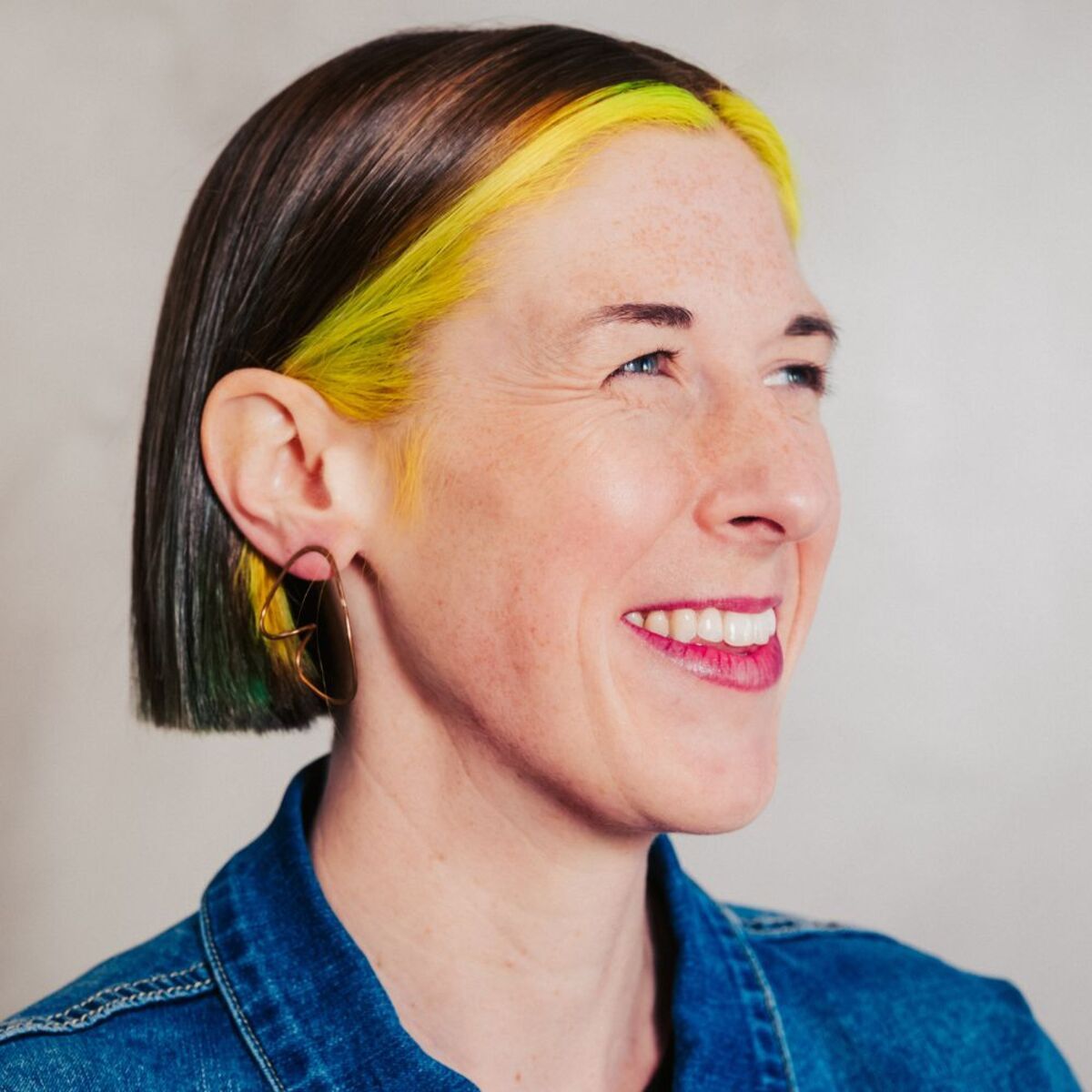
So when I find someone who's built their position on purpose, my ears perk up! Today I’m talking to Bev Feldman about how she built her business and the intentional decisions she’s made about her positioning.
Bev is an email marketing strategist and Kit Certified Expert who helps credentialed professionals who never set out to be marketers build simple systems that allow them to nurture relationships through email without resorting to spammy, salesy tactics.
What’s one word your clients would use to describe your business?
Eeek, I’m terrible at these things! If I had to choose just one, I’d go with “grounded”.
I feel a sense of calm when your emails hit my inbox. So I think you’re spot on! Speaking of, your newsletter is one I read every time it hits my inbox!
But for a lot of folks in the service world, it’s very “cobbler’s children have no shoes.” They really struggle to do the thing they do best for their clients. How do you balance putting the same effort, energy, and intention into your own projects as you do for your clients?
First off, thank you!
I think it helps that while I write some of my clients' welcome sequences and other automated emails, I don't write their regular newsletter. If that were the case, I imagine it would be very difficult for me to keep up with my own!
But in terms of showing up weekly, it's an intention I set for my business, and I have a whole ritual built around it: I go to a particular coffee shop every Tuesday morning and work on my newsletter for an hour and a half to two hours. I have a very clear deadline of 9:15 a.m. because that's when my weekly strength training class starts, so I have to get it out and shipped. Building this whole ritual around writing my newsletter not only helps me actually do it - I genuinely look forward to it.
That said, with all the behind-the-scenes technical stuff for my own business, I very much fall into that cobbler's children situation. For example, I needed to redo my welcome sequence and kept putting it off for many weeks because client work and other things kept taking priority.
I love a ritual! I treat my long-form emails the same way, with a bi-weekly co-working session with a friend. The time parameters really help me stay focused and put some necessary restrictions on my wandering mind!
You position your business alongside a platform (Kit). How do you manage attaching your business to a platform that makes choices beyond your control?
It's something I think about frequently and have chatted about with my peers. I do have very real hesitations about building a business around another business that I have no control over. (Although, plenty of web designers do it!)
Very true! I know a lot of platform-specific web designers.
I decided to focus on Kit rather than spreading myself across multiple ones because it allows me to get to know it on a much deeper level, rather than trying to keep up with all of the software updates across multiple platforms.
But there is a legitimate concern there, which is why over the years I've kind of shifted away from thinking of myself purely as a Kit expert and more as an email marketing strategist who just happens to specialize in Kit.
Oh, this is interesting! You’ve decided which truth to lead with, even though both things are true!
What I do goes so much deeper than the software itself - it's really about thinking through the strategy of email marketing, especially for credentialed professionals who aren't necessarily in the online business bubble. And a lot of what I talk about in my content is applicable regardless of which email marketing software you're using.
I can attest to that! I am not a Kit user, but your emails have inspired some of the way I began to think about my email cadence and structures!
Alright, I’m dying to get to our next question because this is something I see service providers struggle with A LOT in 2026. You're explicitly done-for-you in a space where a lot of people offer done-with-you or DIY versions of the same work.
What made you plant your flag on done-for-you — and how do you think about positioning when someone can technically buy a cheaper, more self-serve version of what you do?
When I started, I was doing both done-with-you and done-for-you work and catering to a more DIY audience. The first way I grew my list was actually through a bundle for bloggers! I very intentionally leaned fully into done-for-you in fall 2025, with the exception of my Kit for Beginners course (which I just retired) and my Power Hour consults.
The reason I made that shift was that when I was offering done-with-you services, with maybe one or two exceptions, things would only ever get partially completed. And I realized that the onus was on me and how I'd structured my services. In order to actually provide the best experience for my clients, I needed to own the whole thing.
I feel this in my bones!!
That being said, I don't see myself as competing with DIY offers at all - there's space for all of us! I offer the Power Hour for people who are doing it themselves and need questions answered. And I'm genuinely happy to point people toward Kit's own documentation and tutorials, because I recognize my services are at a premium level that isn't financially accessible for every business owner, especially earlier in their journey.
My services are really geared toward a specific level and stage of business, and I've just gotten clearer with myself about owning that.
As business owners, we all make choices about where to invest. For example, I DIYed my own website. Not because I think I'm amazing at it, but because I had to pick and choose where to put my money. My services are really geared toward a specific level and stage of business, and I've just gotten clearer with myself about owning that.
I love that you’ve decided to own it! I see a lot of folks waffling between done-for-you and done-with-you business models, and they begin to cannibalize their business. Especially because they treat their done-with-you approach with the same fervor as their done-for-you work.
Speaking of choices—consent-based, done-for-you, Kit-specific—you’ve obviously made a lot of deliberate choices in how you position yourself.
Was that intentional from the start, or did it crystallize over time?
Oh, how I wish! When I started, I had transitioned from my jewelry business into teaching jewelry making, and I was very much in the online business bubble - building automated funnels with countdown timers and fake urgency. I had to unlearn a lot of that. I give a lot of credit to Dr. Michelle Mazur and Maggie Patterson's Duped podcast for realizing how so many of the marketing tactics I had learned were steeped in manipulation. I was also influenced by Tarzan Kay, who was talking a lot about consent-based email marketing at the time, and something about that just really resonated with me.
As for positioning myself as Kit-specific, when I first started this business, I kind of saw myself as doing technical support with Kit and other email marketing software, helping with integrations and connections to other tools. And then I realized - no, I'm going to stick in my lane and really focus on email marketing specifically. It came from iterating, getting clearer on what I could and couldn't do well, and really just owning my positioning and where I wanted to focus my time and energy.
It came from iterating, getting clearer on what I could and couldn't do well, and really just owning my positioning and where I wanted to focus my time and energy.
Iterating is key! I think about my business in year one versus year three versus now, year six, and am so glad I let myself iterate. Otherwise, I think I’d still be designing websites and, quite frankly, be pretty miserable! I got to this place in my business by reminding myself, “Just because I could doesn’t mean I should.”
You mentioned the online business bubble, and I’d love to dive in more there because I feel like a lot of us service providers are (perhaps!) unknowingly trapped there.
So much of your work revolves around consent-based marketing, which I’m sure can feel like swimming against the current of common marketing practices. Does that philosophy show up anywhere else in your business beyond marketing?
Absolutely. I try to be as transparent as possible with my pricing upfront. The first step before we work together is downloading my services guide, so my philosophy and pricing are really clear before anyone gets on a call with me - I don't want anyone showing up surprised.
Heard! I think this is a great move for service providers too, because it helps you protect your time, as well as your audience or clients’ time.
I also make it very clear that if we do have a sales call, I'm not going to pressure anyone. It's really an opportunity for them to ask questions and learn more, without any pressure tactics, because I want people to fully trust that they'll know if and when it's the right time to invest. And honestly, by the time someone books - they've downloaded the services guide, filled out an inquiry form, or booked a call - they're pretty much already there. But it very much does all connect to how I sell.
This isn’t your first rodeo—you used to run a jewelry-making business. Is there anything you learned in that business that you use in your work today?
Let's just say that turning a hobby into a business is a surefire way to suck all the joy out of that hobby. I don't regret it - I wouldn't have started this business without it, because I likely wouldn't have gotten into email marketing - but it's something I'm glad to have left behind. (Though I do miss the physical act of doing something more tactile and staring at a computer screen all day for work is…a lot.)
I am really grateful for everything I learned about marketing through that business. I got very much into blogging, got into the habit of content creation, and picked up skills like SEO and email marketing.
Speaking of turning hobbies into businesses…I was a spin instructor in a former life! My brain still thinks in soundtracks. What song best captures the energy of how you run your business?
Ooh, I both love this question because I have this long-standing pipe dream of being a Zumba instructor. But also, MAN, did I way overthink this 🙈
The answer I finally came up with, which feels incredibly cheesy, is Roar by Katy Perry. There’s this kind of quiet intensity in the song, and it’s kind of how I see my role supporting my clients. My job is in part to (calmly) hype up my clients because I want them to see just how transformative their work is, and how they’re helping their people by showing up in their inbox.
SO cheesy!
I LOVE THE CHEESE!
If folks want to work with you or just soak in some of your knowledge, where should they connect?
I would love to invite anyone reading this to subscribe to my Automate with Heart Newsletter, which shows you simple, authentic ways to stay connected with clients, build trust, and share your expertise.
And if you’re interested in learning about my Kit + email marketing strategy services, you can download my services guide.
(without feeling salesy or overwhelmed)
Thank you, Bev!
And thank you for reading!

Jamie R Cox
I help service-based founders build and operationalize their brand for predictable growth.

Now Booking
Calibration Sessions
My Calibration Sessions have gotten a facelift! These 90-minute sessions are designed to help you chart your path to predictable growth. You’ll leave with a 30-day Navigation plan, a sense of what’s working, what needs to change, and how exactly to navigate what’s ahead.
Brand-Led Strategic Advisory
My books are open for brand-led strategic advisory engagements in Q4. These engagements help you identify the true leverage points in your business while turning abstract ideas into a plan of action.
