Hey {{First Name | Friend}},
Last week, I got an email from a pal asking how I balance working in the business versus working on the business—especially when things are BUSY. My answer had a lot to do with systems, structures, and dun dun dun…organization!
But building these things in your business isn’t necessarily sexy, and unless you’re a freak like me, it’s probably not fun! So today, I’m talking to someone who helps founders build and implement the structures that make their business run—no matter how busy they get.
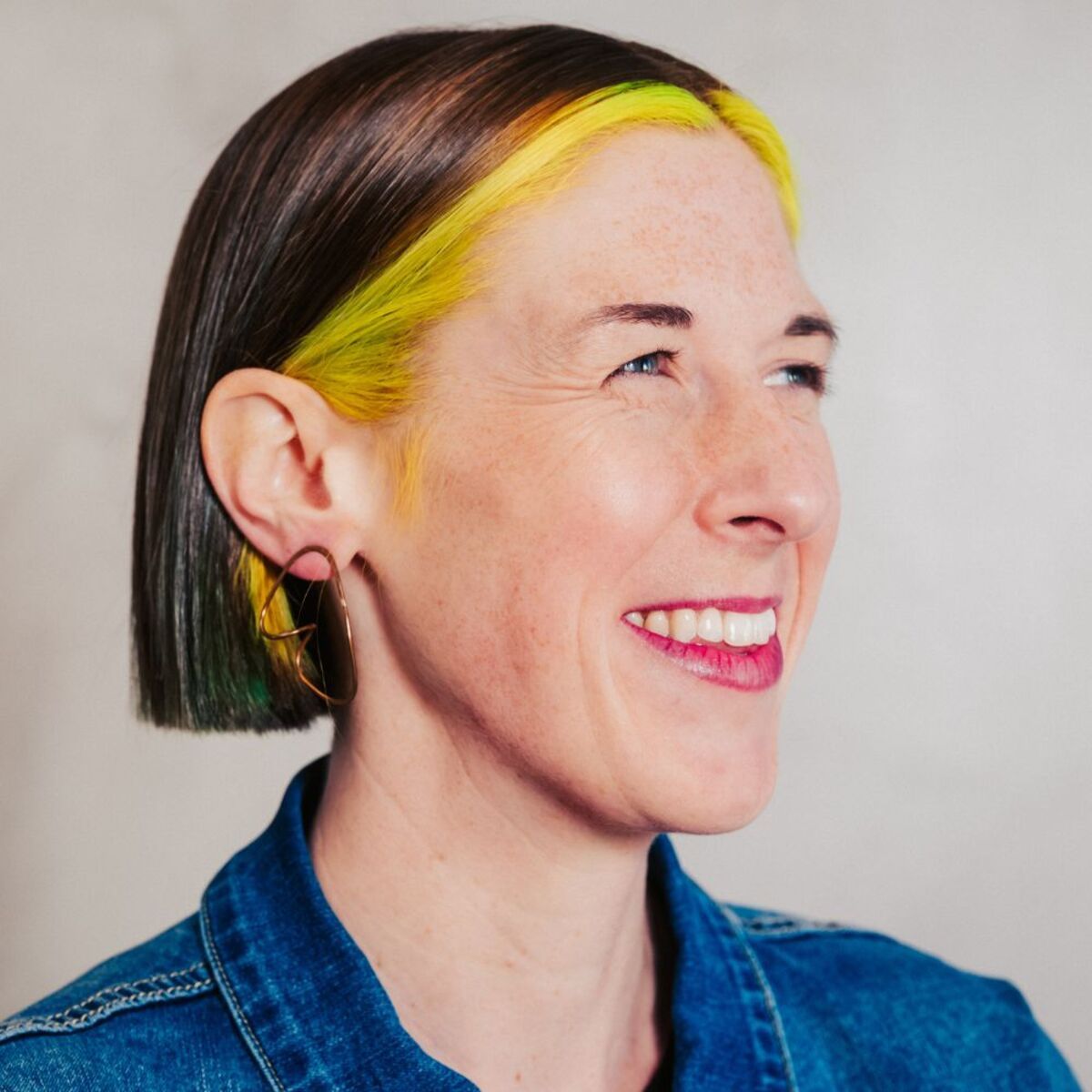
Jessica Murray is the founder of Empower, a consultancy that helps founder-led businesses break their reliance on the founder and build the structure they need for their next phase of growth.
Enjoy!
What’s one word your clients would use to describe your business?
Tough question, but I'll go with: clarity.
If I had to stretch to a phrase, a source of clarity.
I know your work starts with clarity about what’s happening, so that seems like a great word to root to!
Now that you’ve got a few years under your belt in this business, I’m dying to know: Is this the business you set out to build, or has it transformed over time?
It's transformed, and that's normal. Every business starts with a hypothesis, and you learn what's true once you're actually in the market.
I love this idea that a business begins with a hypothesis. You say this so matter-of-factly, but I don’t know that everyone sees it that way!
I built my original plan around project-based work for small, fast-growing service businesses: solo-founder-led, early traction, no operational leadership to build the infrastructure that adoption demanded. That thesis came from real interviews with real business owners in my network.
Every business starts with a hypothesis, and you learn what's true once you're actually in the market.
But I hit the market in mid-2024, which coincided with how a lot of SMBs and tech startups were rethinking how they staffed up (think AI and a shift from the COVID remote work era). I started hearing more about the fractional executive model, and given how much time I'd spent in venture-backed startups, fractional COO work made obvious sense.
Empower now serves founder-led businesses in three ways, each built for a different stage or need:
Advisory, one-on-one with the founder
Project-based consulting, for a team that needs a specific problem unblocked
Fractional COO work, embedded part-time as the operational counterweight to whatever the founder is focused on
The throughline: I let the market and the feedback tell me what businesses actually needed, and I was willing to change course instead of forcing the original plan to work.
Interesting to learn it wasn’t just about what your potential ICP said, but about what the actual market was doing! Both are incredibly important, but I see many folks putting too much stake in one and not the other.
It’s clear, based on the types of work you do, you spend a lot of your day in other people’s businesses. But how do you make sure you give YOUR business the same time, love, and attention?
Honestly, it's always a work in progress. By nature, I default to delivering for Empower's partners before I take care of what my own business needs. For better or worse, that's who I am.
But I built real infrastructure early on to keep that instinct in check. A few things that actually work:
Color-coded calendar blocking. At the end of every month, I make sure my calendar reflects what the next month actually requires: client work, business development, marketing, whatever it is. I take this seriously.
Quarterly resets. I'm a small business owner, which means I'm my own accountability partner. Each quarter, I take stock of the goals I set, assess what actually happened, run my own retrospective on what worked and what didn't, and then reset: new goals, new focus, an honest check on whether the work still lines up with where I'm trying to go.
A protected half-day each week. The goal is dedicated time for deep work: internal professional development, testing a new AI workflow, or showing up in a community. That's the time that actually lets me spot what needs to change before it becomes a problem the following month, quarter, or year.
Annual budgeting, recast at mid-year. That keeps my finances and my pacing honest, not just my calendar.
One thing I really admire about you—and I think one of the reasons we hit it off when we first connected—is your willingness to roll up your sleeves and find a solution to a problem. But I know that with client work, that fix-it energy can be a slippery slope and scope creep is lurking around every corner.
I’d love to hear how you keep that “fixer” part of you in check when your bottom line is…well…on the line.
I think what you're picking up on is my ability to flex between being the strategic thought partner a founder needs and being willing to roll up my sleeves and do the work myself. That comes straight from my time in early-stage startups, where that flexibility isn't optional. It's the expectation.
Here's the thing: a lot of early-stage founder-led businesses don’t have large teams. If they’re going to bring in a fractional leader, for example, that person has to be willing, within reason, to do the work, not just advise from a distance. At those business stages, the founder doesn’t need more ideas; they need traction. The fixer instinct can be an asset, but it can also be the thing that erodes your sanity if it isn’t managed.
The way I keep it in check starts before the engagement even begins. Discovery conversations get specific about what's in scope and what isn't, and what capacity actually looks like. That's trickier with fractional executive work, where lines blur and priorities shift during the course of an engagement, but you can still outline them.
I keep the line open with the founder throughout: "Happy to dig into that problem, but here's what else is already on my plate. I can't do all of it at once, so let's re-prioritize together." I have yet to have that conversation blow up on me.
I'm also upfront about availability and response times from day one. I keep the line open with the founder throughout: "Happy to dig into that problem, but here's what else is already on my plate. I can't do all of it at once, so let's re-prioritize together." I have yet to have that conversation blow up on me.
I love this line! It turns a sense of urgency into a two-way conversation about what’s actually important right now.
It takes real discipline to tame the fixer instinct. But the legwork upfront, the boundaries and the expectation-setting, is what makes it possible to stay in an engagement without scope creep taking over.
You work with a wide variety of clients—from solopreneurs to tech founders. I’d love to hear your thoughts on the popular “niche down” advice.
In what ways has keeping a broader audience served you?
I've worked across different industries and stages throughout my career, and there are common patterns about the challenges that surface. The business context is truly what changes.
That said, I have narrowed in, just not by industry. My actual niche looks like this:
Founder-led. Usually a solo founder who's the visionary or technical archetype. As these businesses grow, that founder needs a counterbalance, someone whose job is making sure the day-to-day business runs at the velocity the founder's vision demands.
Stage. For tech organizations, that's typically seed to Series B. For more traditional small and midsize businesses, it's usually seven to eight figures in top-line revenue. These stages are where you typically see inflection points where the stakes get higher for creating stronger alignment between people, process, and technology, and that's where I can really come in and add value.
Internal operations, not supply chain. My focus is on the internal business operations side, less on the supply chain and logistics work that often comes with product-based businesses.
This year alone, I've worked with a tech startup, an interior designer, a boutique law firm, a multi-unit veterinary business, a tech-enabled services business, two beverage brands, and a multi-location fitness brand. Different industries, varying challenges, but the value Empower can deliver across offerings stays consistent.
Are there any ways this approach hasn’t served you?
It makes marketing harder. A tighter niche gives you a cleaner story to tell and an easier audience to target. Mine takes more work to explain, and I've had to get more precise about naming the pattern I solve for instead of the industry I solve it in.
It’s all a trade-off, right? It sounds like the pros outweigh the cons in your case!
I like to joke that if you look closely enough, you’ll see me and my mistakes in all the content and the lessons I share. Is there any advice you find yourself giving to your clients that you wish you would take yourself?
Don't lose sight of your North Star. Consistently gut-check yourself on whether you're actually staying aligned to it.
I'm usually diligent about this, but I’ve been returning to this question more than I’d like over the past several months: is everything I'm doing actually in service of the longer-term vision for this business, or has there been drift? And if there's been drift, how do I get back?
This goes back to having those quarterly resets you mentioned! Having that regular check-in with yourself is so important. Otherwise, you can drift further and further off course without realizing it until it’s too late.
It feels like we’re headed toward the end of the year at breakneck speed! What’s top of mind for you as you finish out this year in your business?
I'm heading into the end of the year with what looks like a nearly full partner workload.
HELL YEAH! Congrats, Jessica!
Building this business from zero has been both exhilarating and punishing, and there is nothing more humbling than watching that process play out.
Two things are top of mind as I close out the year:
Do the best work I can for the people I'm serving right now, without losing sight of what needs to happen behind the scenes to carry that momentum into 2027.
Get specific about what 2027 should look like, for me and for Empower, instead of letting it default to whatever the busiest month decides for me.
OOF. Letting the busiest month decide what your life looks like is such a trap that I see a lot of solo operators falling into. Granted, there’s only so much we can control, but knowing what we want our life to look like is a great decision filter for how we spend our time.
What song best captures the energy of how you run your business?
This is hard! I often find myself jamming out to Beyoncé in my car after a long day. One song that comes to mind is “Break My Soul” because the message is about not being held down when something isn’t working, feels hard, or seems wrong. It’s upbeat and has a message of reclaiming energy. That’s part of what Empower tries to deliver: renewed energy.
I love this song, mostly because one of my faves, Big Freedia, is featured on it!
If folks want to work with you or just soak in some of your knowledge, where should they connect?
The best way to get inside my brain is to subscribe to The Empower Edit, which is the newsletter I regularly publish. I aim to provide practical foundations and resources for business builders.
If you want to have a direct conversation, reach out to us via our website or on LinkedIn.
Thank you, Jessica!
And thank YOU for reading,

Jamie R Cox
I help service-based founders build and operationalize their brand for predictable growth.

Now Booking
Calibration Sessions
Calibration Sessions are designed to help service-based founders navigate inflection points while identifying their best opportunities. You’ll walk away with a 30-day Navigate Plan to help you chart your path to predictable growth.
Brand Positioning + Strategy
I have one more opening for brand positioning engagements this fall. These engagements help ambitious practice owners develop the positioning and business structures that help them command premium pricing and pivot upmarket.
