Hey {{first_name | there}},
“Create a membership,” say the people selling a membership course.
“Host a free workshop,” say business influencers with 20k followers.
”Just raise your prices,” says someone who’s never had to fill their pipeline.
All of this conflicting advice is frustrating and just goes to show: there’s no one way to run your business. It’s just the way that works for you.
But figuring out what works for you, without seeing what’s working for everyone else, feels a little like Tim Gunn giving Project Runway contestants $10 and a can of tuna fish and asking them to make a Haute Couture gown in 6 hours.

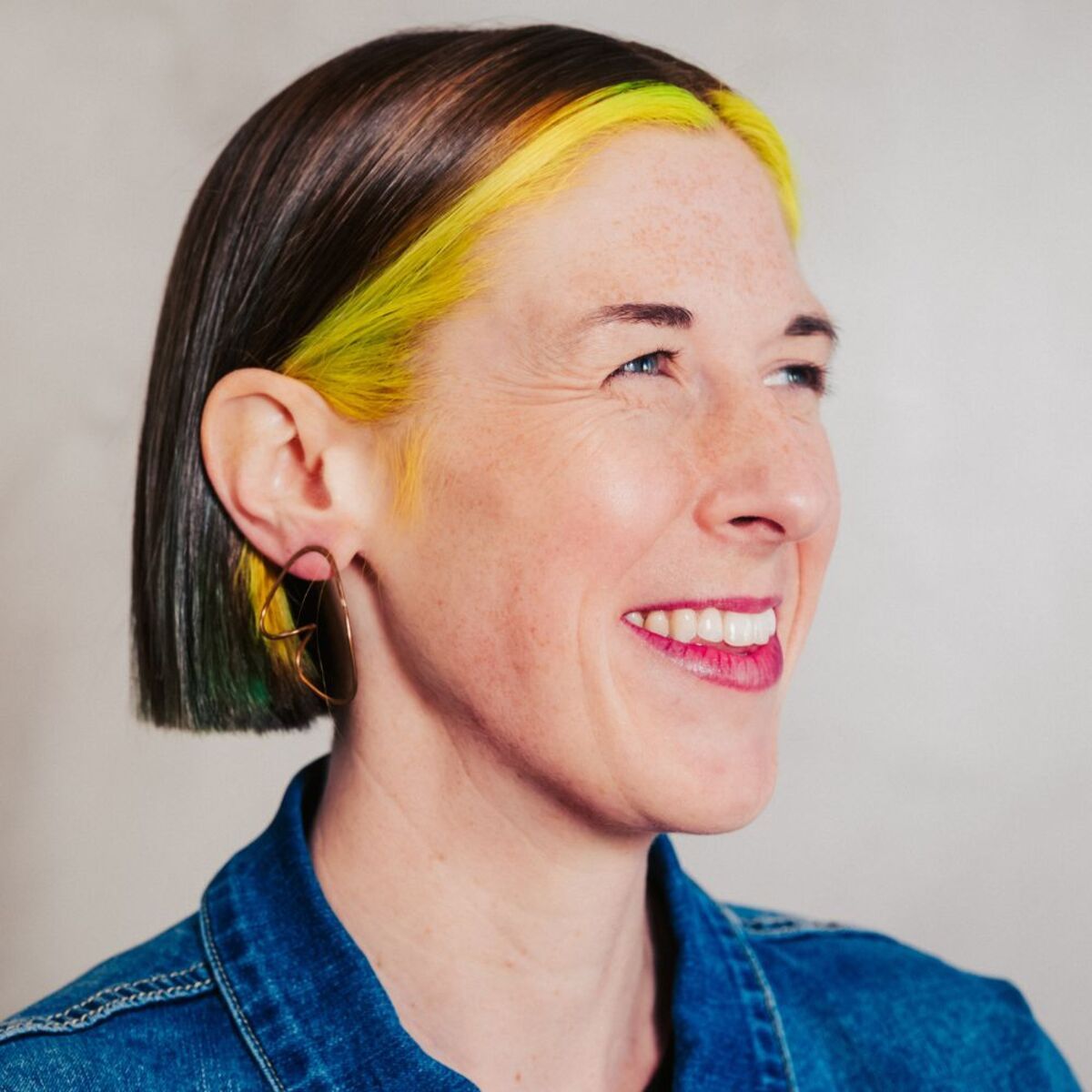
So I asked Lex Roman, the primary writer, publisher, and community convener behind Revenue Rulebreaker, to share what’s working for them in 2026 (after seven years and several iterations of their business).
You’re in for a treat!
Want to Be Legendary?
In this issue of Brand Burnout, you’re going to read all about The Legends, a loose network of creatives playing by their own rules. The Legends are backers and beneficiaries of Revenue Rulebreaker and receive regular shoutouts, warm intros, visibility, access to special events, and more.
Lex is offering 25% off an annual subscription, just for the Burnouts 🔥
What’s one word your audience would use to describe your business?
Hopeful
I feel that! When I read your work, it helps me see a clear path forward. But the beauty in it is that it holds space for the reality that life is hard in 2026.
We’ve known each other for a few years thanks to Pollen (RIP!), and I’ve seen your business model change significantly. You worked 1:1 with clients via large engagements, then ran a high-ticket membership, and now you’re an independent publisher with a subscription tier.
What do you like about the current iteration of your business?
First, RIP Pollen is right. I loved that community and meeting people like you. It was a real loss to the indie service provider world when it went away.
The thing I love most about my current business is that I don’t face a lot of pressure from any one person. When you take big checks, there’s a cost. You’re responsible for something. My first solo consulting gig was a $100k+ contract. As a person with a variety of mental afflictions and anxieties, I find that immensely stressful even when there’s no actual outside pressure from a client.
I do still take higher sums of money from sponsors, but I’m hoping to wean off that eventually and go back to smaller ad buys. I love being a business that serves many (not that many, but certainly many more than my consultancy or my membership did) and largely operates as self-serve.
That said, I’m currently feeling some customer service pain from the recent growth we had, and that’s something I’m mindful of too: how many people can I serve well in this model? My guess is somewhere around 500-750, but I really need 900 to make it viable without sponsorships, so we’ll see if we can get there or if we need to adjust the model.
I think this is a good reminder that there’s not a silver bullet or one “easy” model for business; it’s more about understanding the ways you work best and knowing the tradeoffs involved in your decisions.
Since you’ve seen those trade-offs, I’m curious if there’s anything you miss about the old versions of your business.
This business could not have existed without my membership, Growthtrackers.
I really loved building and running that, and the relationships I formed with those members continue to this day. Many of them are involved in my current business as Legends.
This year, I’ve been experimenting with bringing more “Growthtrackers style” events back. We ran an event series in Q1 that was in that style, and we’ll probably do another in the fall. I do enjoy going deeper on people’s businesses and hearing what they’re actually executing, which is harder to do in my current publisher-community model.
But I can see how the events would help you scratch that itch without going all the way back into 1:1 work!
What about lessons you’ve learned along the way? Are there any truths, ideas, or ways of working that you’ve carried over from former versions of your business?
I learned I hate working with clients!
And I know that other service providers will say, “You just didn’t know how to work with clients,” but I tried for a decade.
Before I went out on my own, I did business development inside the agencies I worked for. I worked in client services as a designer and growth lead for several years. I freelanced, and then I formalized a growth consultancy that served growth-stage (Series B and C) tech companies.
By the time I went out on my own, I was itching to find another model that wasn’t client services. I was speaking for a bit of money, selling a class that did fairly well, and I was asked by a tech publisher to write a book, which I ultimately declined. But I knew there were other ways to make money, and I desperately wanted to make one of them work.
Revenue Rulebreaker came out of this now 7-year-long journey I’ve been on to find a model that works for me and to create a space for others to experiment with and discuss what works for them.
Revenue Rulebreaker came out of this now 7-year-long journey I’ve been on to find a model that works for me and to create a space for others to experiment with and discuss what works for them.
Speaking experiments…you’re a person who runs a lot of them!
That seems rare in the service provider world, because most people are so attached to their ideas that when an experiment doesn’t work, they take it personally. But an experiment that doesn’t pan out isn’t a failure, it’s just an experiment doing its job.
I’d love to hear how you practice the art of detaching when experiments don’t meet expectations.
The most recent example of a failed experiment was our Legendagram invitations in February, where I asked Legends to invite a friend to our mixer anonymously, kind of like candygrams in high school.
It flopped pretty hard because there’s too much spam on the internet, and when I sent the invites, the recipients were like, Who’s this? Must be spam! And [the invitations] mostly went ignored until some Legends just invited their people directly.
Yup! I did invite my person directly. 😂
I was bummed that so many people couldn’t Google me or the brand or check the guest list for names they recognize, but I misjudged how people use the internet now. Even though I wanted it to work, it didn’t. I know I can’t change people’s behavior, so I just have to let it go.
For small things like that, it’s easy because if people don’t take the invites, it’s kind of a dead end. For bigger things like a story series, it can be harder because sometimes it feels like it’s worth doing something even if people don’t get it.
We’re about to do a small series for Pride month, and I don’t know how it’s going to land, but we’re going to do it anyway.
I know I can’t change people’s behavior, so I just have to let it go.
You briefly mentioned it earlier, but you’ve got a membership called Legends. I may be biased, but I think it’s the best place on the internet. I’m a Lifetime Legend because I’ve never met a better group of people! Everyone I’ve met through you is willing to share, asks great questions, and is thinking so deeply about their business or whatever project they’re working on.
What do you think it is that attracts these people to you and The Legends Network?
The Lifetime Legends keep me going! Thank you for this high praise. That means a lot to me.
The vast majority of the Legends come from other parts of my life. They’re past colleagues from my time in tech, I met them through other communities (like you and me inside Pollen), they were clients or members of mine before, or we’ve known each other for years in professional circles. So part of it at least is that, if they’ve hung around me that long, it’s likely that we still have something in common, which means you’re likely to have things in common with each other.
The other thing that has been surprising is that Legends is a confusing and unknown format to a lot of small business owners. People are constantly asking me what it is. I don’t think it’s that hard to understand — it’s the premium tier of a small business publication that comes with loads of networking benefits — but it’s too hard for many to grasp, and the $99/year price point turns them away from even trying it. If you’re a person willing to toss $99 in and just come find out, you’re a risk-taker, a believer, a doer, and a community builder, and you’re gonna make the most of what you just joined.
Become a Legend!
Alright, if this praise didn’t convince you, here are three more reasons to become a Legend.
Meet your next best friend. This might seem like an exaggeration, but I met one of my best friends, Devin Lee, at a Legends mixer a few years ago.
Get an invite to the event(s) of the year. Lex hosts the most amazing mixers and campaigns that have helped me grow my business. I saw 657% return on my investment within the first two months of joining.
Get your finger on the pulse of new ideas and what’s working. I read every issue of Revenue Rulebreaker and have gained so much insight into how other people are running their businesses. It’s a spark of inspiration this doom and gloom world.
Brand Burnout readers can take 25% off an annual Legends subscription.
To bring it back around, you’re attracting other people who are willing to experiment!
And you must be doing something right! When I wrote these questions a month ago, you were hovering around 250 members, and now you’re at 356 Legends! Congrats!
It’s crazy to me that 356 people are now part of this project. I am grateful for every single one of them.
But, as you touched on earlier, with 356 customers, you’ve opened up a new can of worms in the customer service department. I’m sure people have a lot of thoughts about how you should run your business.
How do you filter this information and decide what’s worth paying attention to?
Because I have so many interests and pivots under my belt, the diversity inside Legends is wild. I find filtering the inbound feedback I get to be one of the hardest parts of this one-to-many, many-to-many model.
We’ve got fertility experts, cake designers, journalists, web designers, conservationists, historians, and podcasters. A Legend just joined us who runs a foraging school in the UK. I always say it’s creative entrepreneurs because that fits most, but that label also flattens how vast the expertise and operating styles are in this group. Everyone needs something different.
I love getting feedback on individual stories. That’s the easiest to parse, and it helps me gauge that a story landed and was useful (or not). What’s hard to synthesize is the wide range of feedback I get on our activities inside the network and our editorial strategy as a whole.
I do need this feedback, but it’s just tough to find patterns in it. Some people want a Slack, other people hate Slack, and even more people like that there’s no live community at all. Some people want more digital product stories, other people feel those don’t apply to them at all. It’s tough to reconcile. Some people like that our mixers have music, others feel it cramps their style.1 Who is right?! Everyone! No one!
What I’m going to end up doing is formalizing more channels for feedback, like a reader survey I’ll launch in June and our Quarterly Earnings Calls. Otherwise, I’m going to choose some directions and see what the reaction is. I certainly care what the Legends think and want to hear from them, but I also can’t be paralyzed by the millions of ideas we all have for what we should do next.
My hope is that people stay with me even when one particular thing doesn’t resonate with them, knowing that I will come back around and serve them in other ways.
You were in Atlanta when we first met, then nomadic for all of 2025, and now you’ve settled in Bogotá for the year.
Has your physical location changed anything about the way you run your business?
I made a video on this on my YouTube channel, but I couldn’t run any of my previous businesses and live this way. I realized I had an opening to live on the road because of the model of Revenue Rulebreaker, where I was mostly working solo without any mandatory meetings.
For all of October last year, I was on this island off the coast of Honduras called Roatán, and the internet was real touch and go; there was only one coworking space, and there were basically no coffee shops you could work at. Amazing that there was even a coworking space, but it burned down the week before I got there, so they were in a temporary spot that wasn’t very conducive to calls. Suffice it to say, there was not an ideal setup for me to teach classes or lead workshops.
Luckily, I could plan around that and basically take no meetings that whole month. I ended up renting a second Airbnb at one point just to film a YouTube video because the one I was staying in was too dark to shoot in.
I spent 6 weeks in Oaxaca, Mexico, too, and there are several very rad coworking spaces there, but my apartment basically had no wifi (which was my fault; there’s plenty of wifi in Oaxaca). I had to upgrade my phone hotspot, and at one point, it was so bad I considered getting my own Starlink. Now that I’m in Bogotá, it’s better. It’s a business city, and there are plenty of places to work and film and record podcasts, so I’ve been able to take on more virtual speaking and classes this year.
I may have mentioned before, but I was a spin instructor in a former life, and my brain thinks in soundtracks. What song best captures the energy of how you run your business?
I always forget this about you and wish I had taken one of your classes. I love spin!
Magic by B.o.B
Wow! This was a special kind of throwback for me! And now I regret not playing it in a spin class before!
If folks want to connect with you and some of that magic, where can they find you?
Get my newsletter at revenuerulebreaker.com/newsletter or find me on LinkedIn.
Thank you, Lex
And thank YOU for reading,

Jamie R Cox
I help founders of service businesses refine their focus when their business is at an inflection point.

Now Booking
Get a New Perspective
Step right up! See what you’ve been missing! Send me a bit about the challenge you’re currently working through in your business, and I’ll send back a personalized video about what I see, what may be happening beneath the surface, and where to focus next.
Calibration Sessions
I’ve got X spots for Calibration Sessions in X! These one-hour, structured strategy session designed to give you clarity, direction, and next steps for your most pressing business challenge.
Brand-Led Strategic Advisory
My books are currently open for brand-led strategic advisory engagements. These engagements help you identify the true leverage points in your business while turning abstract ideas into a plan of action.
1 Author’s Note: I will fight anyone who does not appreciate the musical stylings of Benjamin Mora.
